 Budgie SanctuaryRescue
Found a bird?
Here’s how you can help.
Finding a bird can be worrying, especially when you’re unsure what to do next. Your kindness can make a real difference—both to the bird and to a family who may be desperately searching for them.
Start with safety, then take steps to find out where the bird belongs.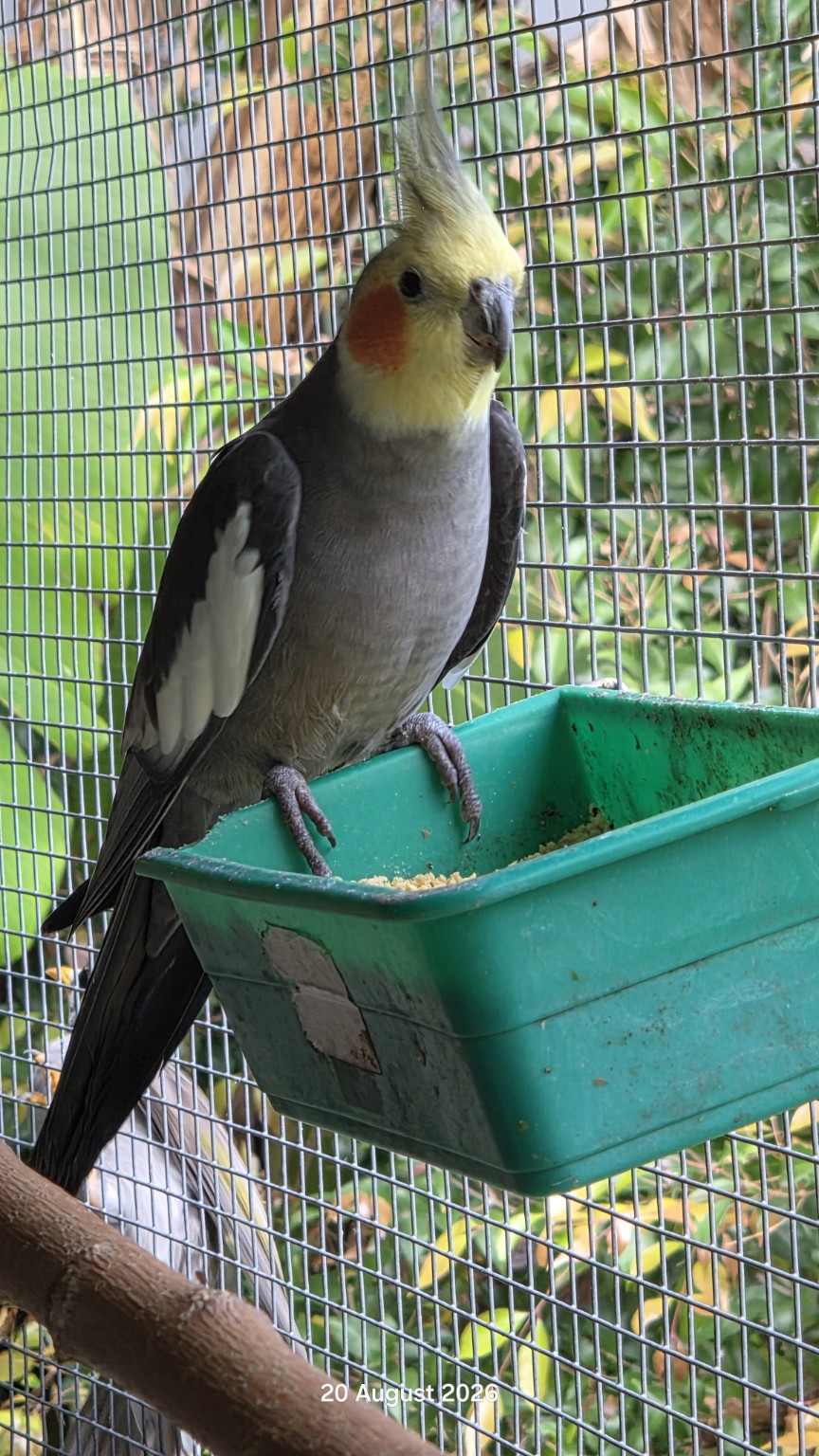
Is it a lost pet or a wild bird?
Budgies, cockatiels, canaries and other companion birds found outdoors may be escaped pets needing help.
Some native parrots are also kept as pets, so species alone does not tell you whether a bird is lost. If you’re unsure, take a photo and ask a vet, bird rescue or wildlife organisation for advice.
A young wild bird on the ground is not always abandoned. Fully feathered fledglings may be learning to fly while their parents continue caring for them nearby. Keep pets away, observe from a distance and seek wildlife advice before intervening. Injured birds need prompt help.
Keep the bird safe
If you can safely contain a suspected pet bird:
- Close doors and windows before handling it indoors.
- Use a secure bird carrier or suitable cage, checking that doors and gaps cannot allow an escape.
- Keep it somewhere quiet, away from direct sun, draughts, kitchen fumes and other pets.
- Keep it separate from your own birds and wash your hands after handling.
- Minimise handling and avoid chasing it repeatedly.
Ask a vet or experienced bird rescue about suitable food and water. Never force food or water into a bird’s beak.
Do not release a suspected escaped pet to see whether it will fly home.
When to contact a vet urgently
Seek veterinary help promptly if the bird is bleeding, struggling to breathe, unable to stand, visibly injured or unusually weak.
Any bird caught by a cat or dog needs urgent veterinary assessment, even when no wound is obvious.
For injured wildlife, contact a vet or wildlife rescue service. Follow their instructions about containment and do not offer food or water unless advised.
Help find the owner
Once the bird is safe:
- Record the details. Note the date, time and exact location found, and take clear photographs.
- Contact nearby vets. Owners may have already reported their bird missing. Contact clinics in surrounding suburbs too.
- Arrange a microchip scan. Some pet birds are microchipped. A vet can check; no microchip does not mean the bird has no owner.
- Contact the council for the area where the bird was found. Ask about its current found-bird procedure and recommended contacts.
- Check and post on ParrotAlert. Search existing lost listings and create a found-bird listing at parrotalert.com.
- Share locally. Post in relevant lost and found pet groups and community groups, and check missing-bird notices.
Keep listings updated, including when the bird moves into someone else’s care or is reunited with its owner.
Protect the bird when someone claims it
Keep some identifying information private, particularly complete leg-ring numbers and distinctive details.
Ask a claimant for evidence such as earlier photographs, veterinary records, a matching ring or microchip number, or other information that establishes ownership.
Finding a bird does not mean it has been abandoned or is available to keep, sell or give away.
How we help
At Budgie Sanctuary Rescue, our aim is to give found pet birds safe care while actively trying to get them home.
Our process includes posting found birds on our Facebook page and ParrotAlert, sharing to relevant lost and found groups, contacting vets in and around the area where the bird was found, and scanning for a possible microchip.
We follow a three-month holding policy for found birds in our care while continuing efforts to locate their owners. This is our rescue policy.
Need help with a found pet bird? Contact us with a photograph, where and when it was found, and any concerns about its condition. Please contact us before bringing a bird—we are a home-based rescue, and intake depends on available space and suitable accommodation.
Further guidance
These resources explain lost-animal procedures and wildlife care. Council services and shelter intake arrangements vary, so contact the relevant organisation before travelling.
- RSPCA NSW — Lost or Found an Animal
- Animal Welfare League NSW — I’ve Found an Animal
- Council guidance example — Found pets, including birds
- WIRES — Emergency Rescue Advice
For native wildlife assistance: WIRES 1300 094 737.
Guidance reviewed 8 November 2026.